Showing posts with label Embroidery. Show all posts

Tuesday, February 21, 2023

Past embroidery


Past embroidery


Past projects that I either lost the paper for, or never wrote a paper because they didn’t get submitted in an arts display. Fortunately I have found quite a few pictures.


Bayeux stitch sample- Little sample heart I made as an example to show a friend the different elements of Bayeux Tapestry style of laying and couching embroidery.


Fighter favor- Drawing out a “Butt Banner.” A favor for a fighter to put on their belt after they asked to fight for me in a Coronet tournament.
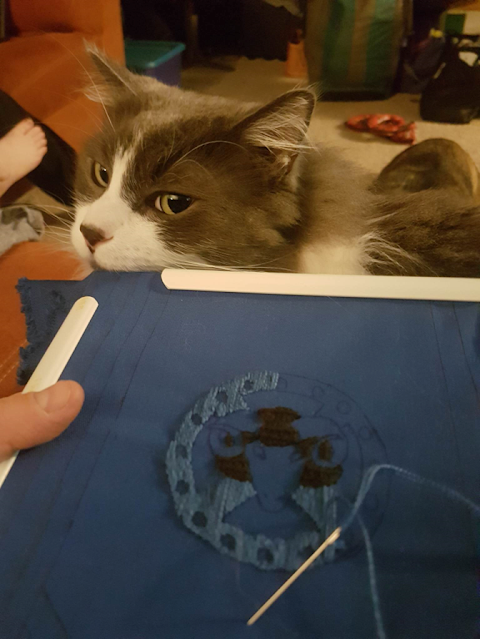


A dear friend’s kitty helping me to embroider.


Starting to fill in.


Really looking like something now.


Apparently I was bouncing back and forth between borders and heraldry.


Down time in the old shop. An airplane wing can be very comfortable.


Finished belt favor, all done in Bayeux Tapestry style.


Fighter favor number two- Belt favor number two, done for a different fighter a few years later.


Coming along.


Finished favor. Used my heraldry, and the chevron from his in this design. All done Bayeux Tapestry style.


Bayeux inspired belt pouch- I was delighted to find this border section in the Bayeux tapestry. As you may have noticed I am a fan of the piece, and it is my go to style for embroidery. My heraldry has a ram’s head, and this full sheep would be perfect for a belt pouch.


Filling in the body, starting the process for couching.


Progress on the body.


Outlining the body. Triangular dividers were also used in the original tapestry’s borders, though not specifically next to the rams.


Hand sewing the bag body.


Finished belt pouch. Tabs are leftovers from a large tablet weaving project.


Needle book I also made peeking out of the finished pouch. There is a separate posting about the needle book.


Mammen inspired tunic neck- Inspiration for a neckline. Embroidered creatures from Mammen, in modern day Denmark.


The original tails remind me of lions, so I used that as inspiration to do this variation.
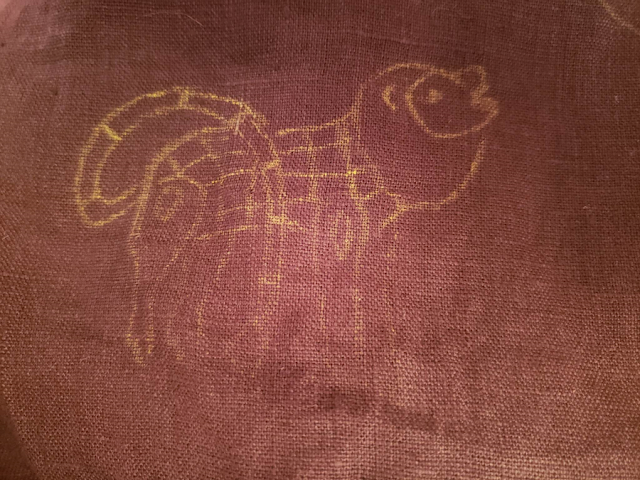


Drawing guide lines on the fabric.


Looking good so far.


One done, and one a good ways towards completion.


I don’t know what stitch was used for the original Mammen creatures, but Bayeux works well for my lions.


Finished collar, ready to go on a tunic.


Dala holiday ornaments- Painted wooden horses are slightly out of period for the SCA, and Dala horses more so. But I have always really liked them, so I made a trio of ornaments.
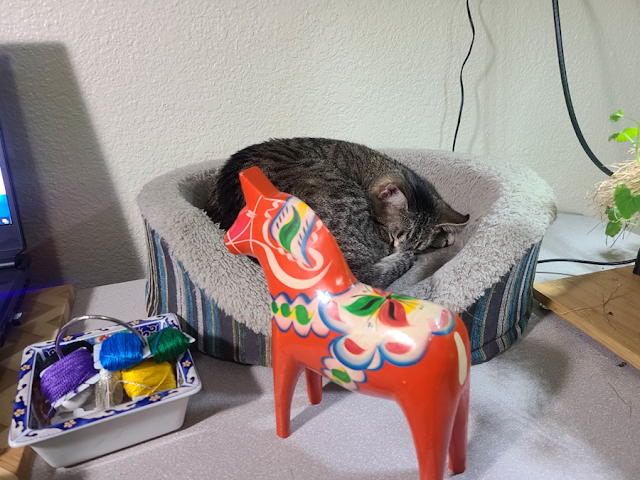


My hard working assistant, and the horse I modeled the project after.


Getting closer.


Edges and then stuffing, with my ever faithful companion.


Blackwork stitch along- Blackwork stitch along that my sister and I are doing.


Forward progress on week one of the stitch along.

Wednesday, March 9, 2016

German Brick Stitch Needlebook

 German Brick Stitch Needlebook


20160304_035338.jpg


At times it is so easy to put the “pro” in procrastination. Judging from the timestamp on the photos, this project took around a year and a half from start to completion. A few stitches here and there, but frequently being put aside for other A&S endeavors. 


This needle book was from a class given during the fall Prince’s Prize Tourney in A.S. XLIX (2014). Which I thoroughly enjoyed both from a crafting aspect, and from the vast knowledge of the instructor on the subject. 


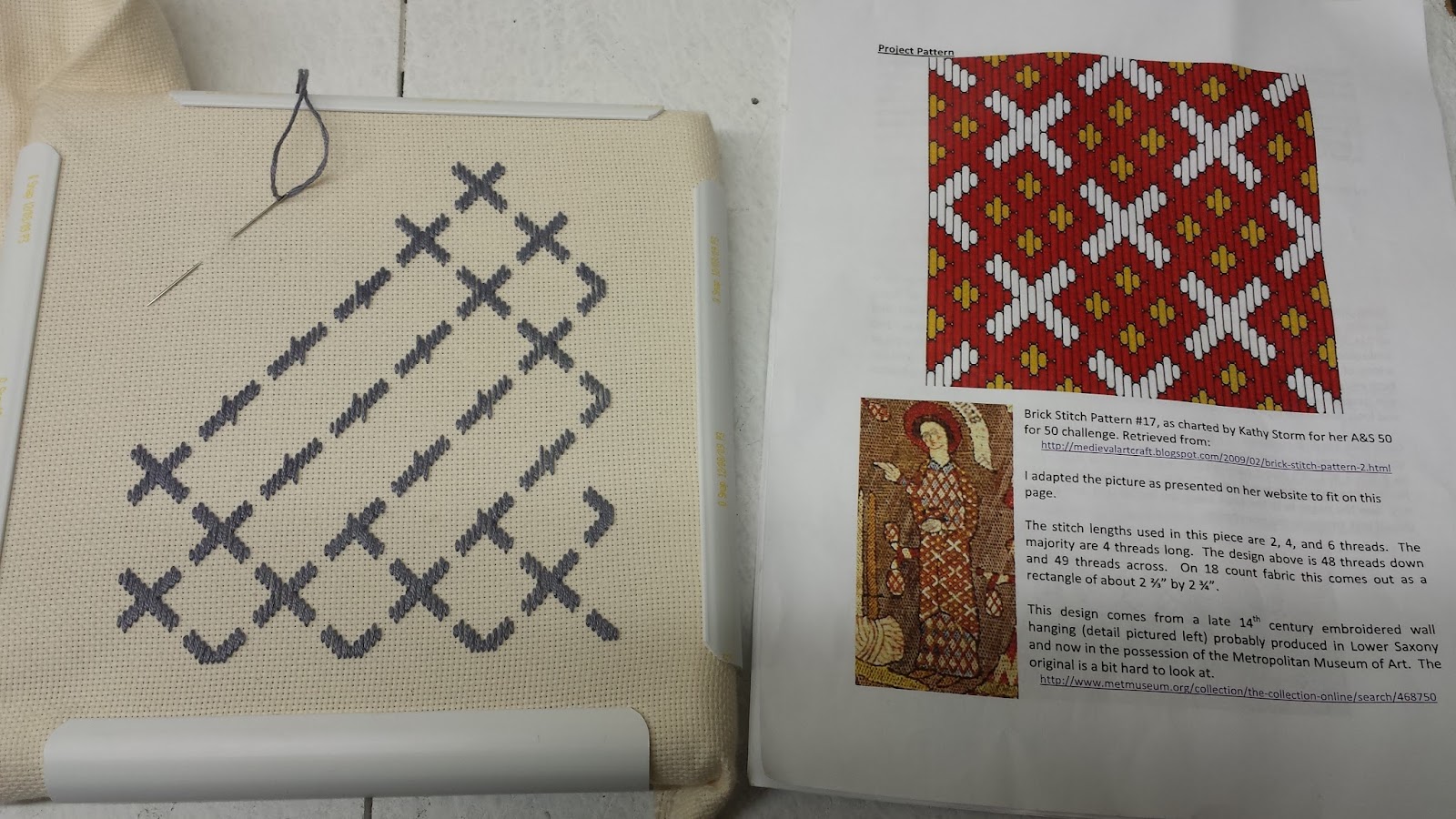
This pattern was from a late 14th century wall hanging, possibly made in Lower Saxony. German Brick stitch was used in the early 14th through the mid 15th century, with examples being found in the Westphalia and Lower Saxony regions of Germany. It uses geometric patterning, and a satin stitch construction, The historical examples used mainly silk or linen for the embroidery thread. Sometimes a “gilt strip” was used as well, which was a gilded material of similar diameter to the pattern threads. Metal wrapped threads were well known in Europe since the 10th century from the imported woven cloth samite, and I surmise that gilt strip is the same gold and silver wrapped threads.


20140922_044442.jpg


End of the first day. Progress alongside the class handout showing what the  resulting pattern will look like.


20150904_093933.jpg


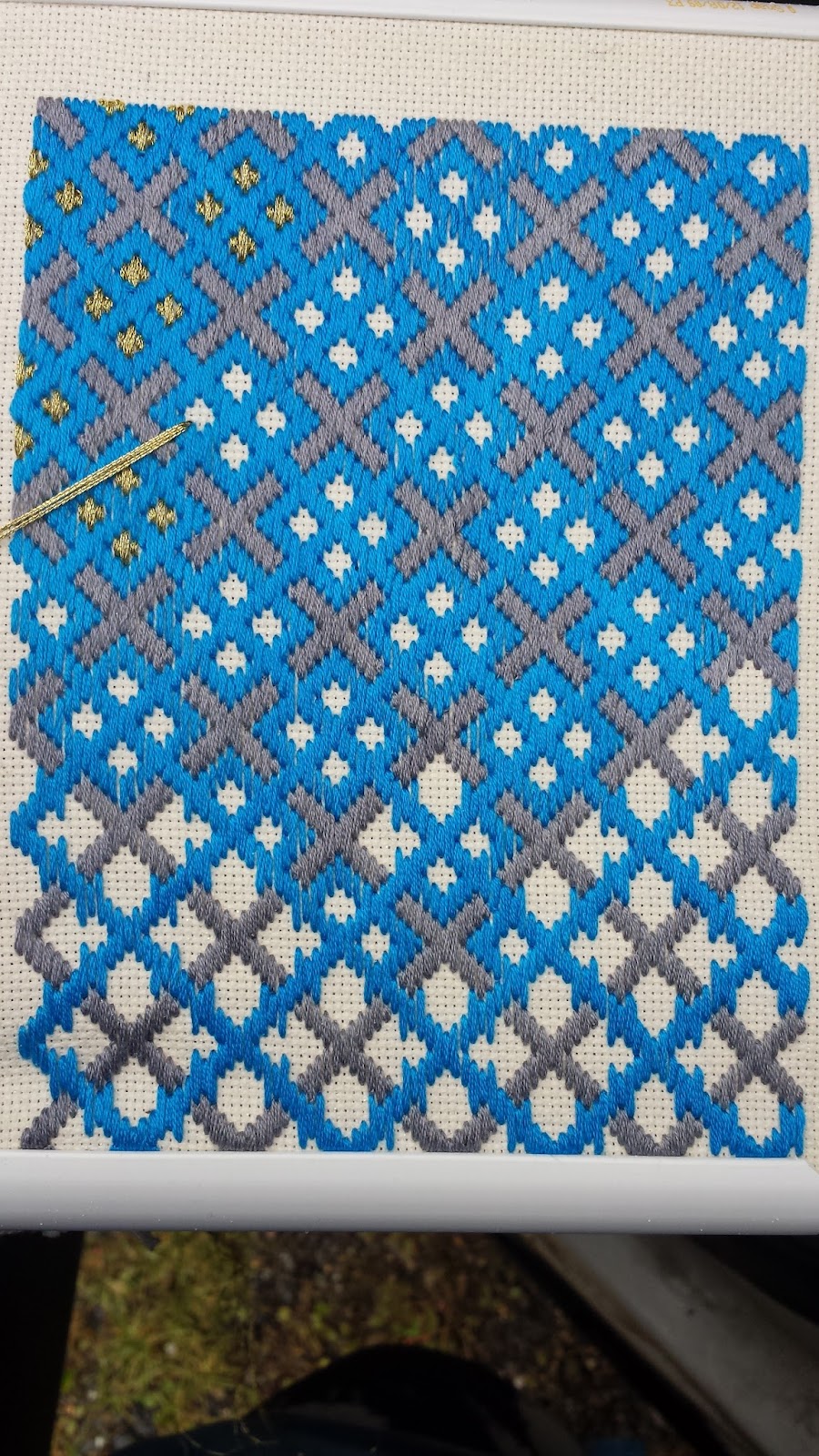
Continuing on. I had run out of blue, so started with the gold sections. The “metal” wrapped threads posed a challenge to work with, but became easier with practice and changes to technique.


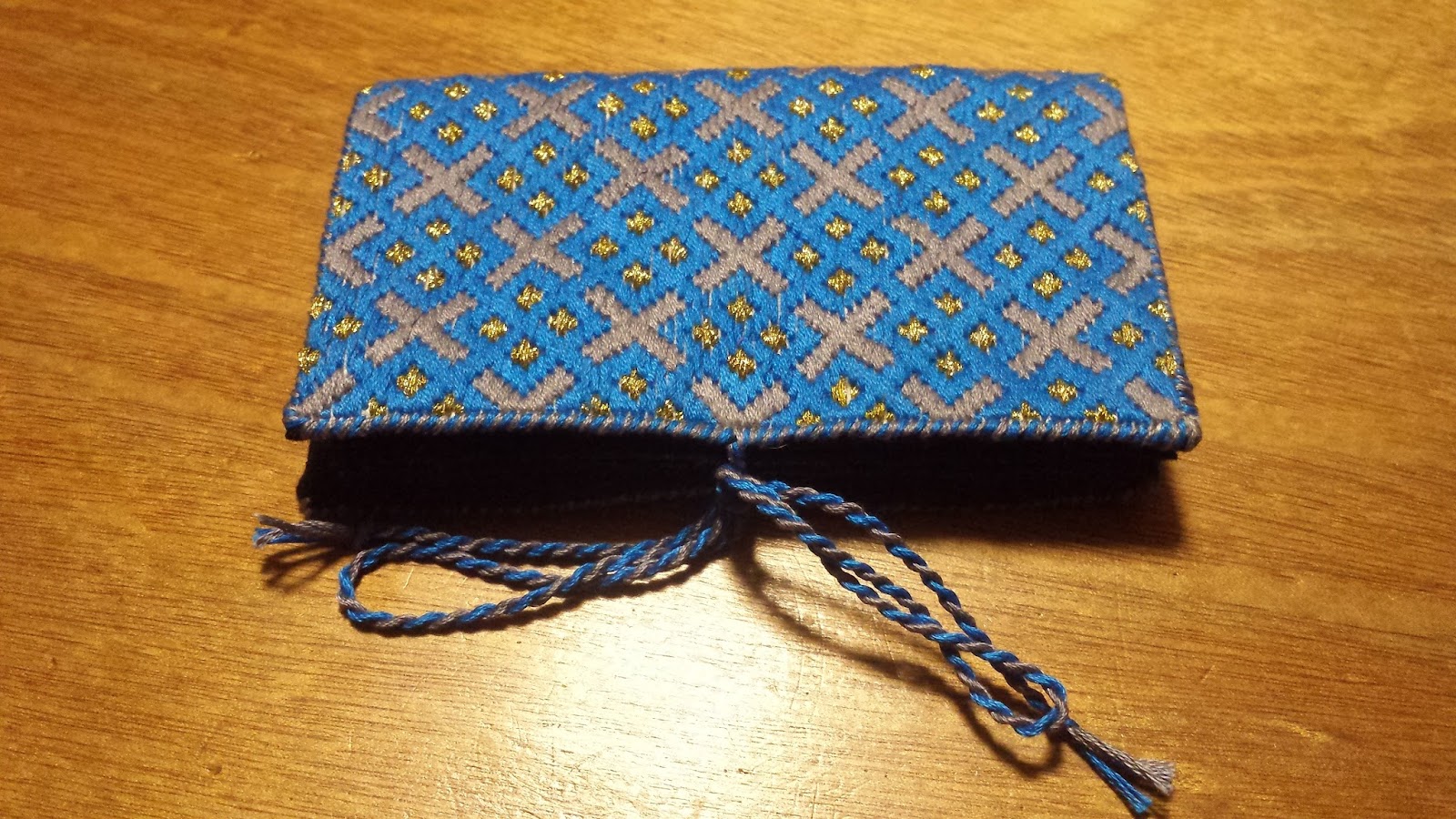
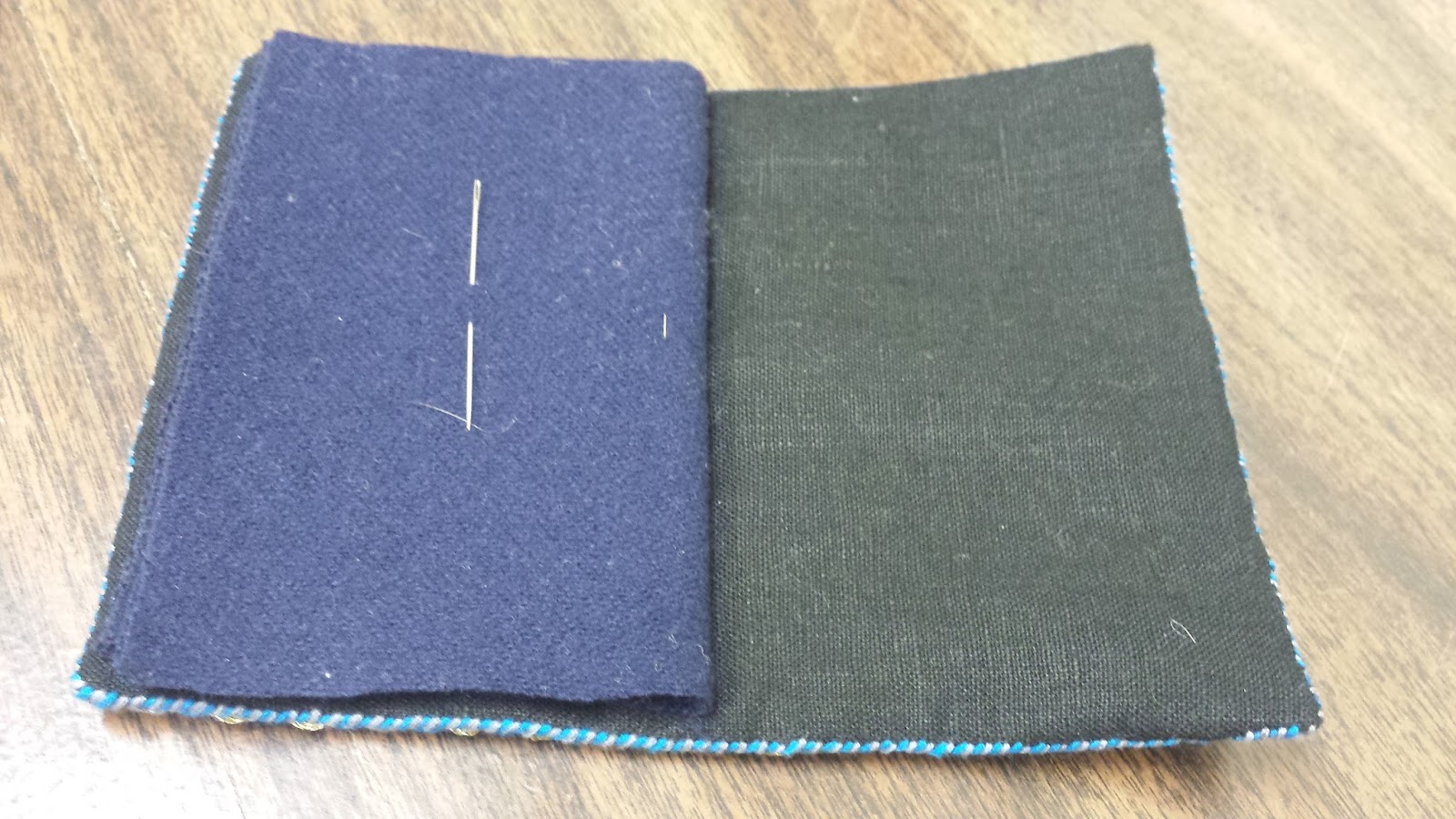
I used cotton embroidery cloth for the base. Blue and grey embroidery threads are cotton, while the gold “metal” is polyester. The inner cover is linen, and the pages are wool. A more period version would be nice to do in the future. The materials used in this needle book had advantages in that they were inexpensive and readily available, though with the diameter of the embroidery floss a tighter hole spacing in the embroidery cloth would have suited the project better. The ground cloth was convenient in that the weave gave regularly spaced holes, making the pattern much easier to work. 


20160206_235530.jpg

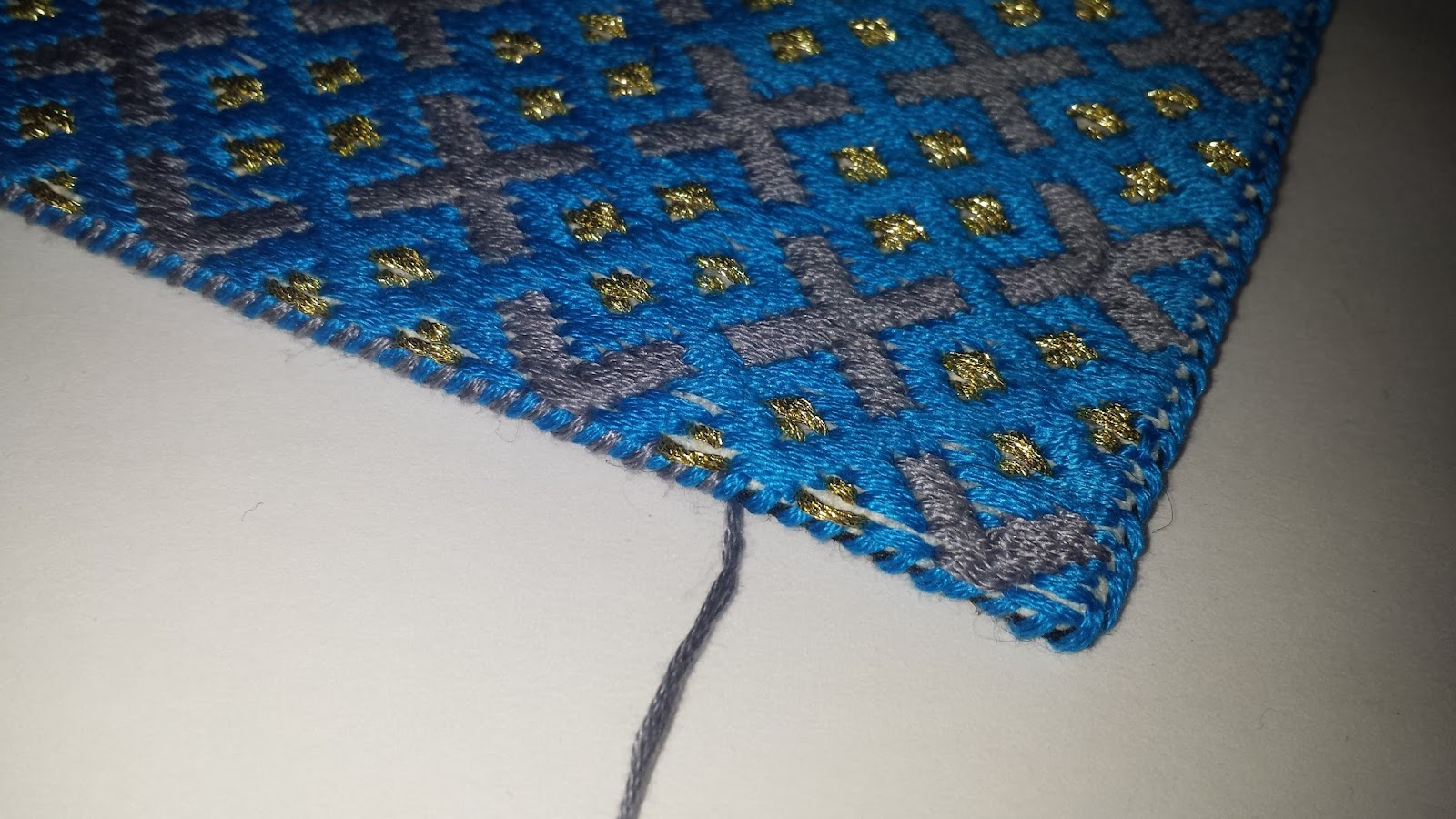
Here we go loop de loo… Attaching the linen inner cover to the embroidered outer cover, while binding the edges. I used the blue first, while leaving space, then came back to fill in with grey.


Despite my taking so long, this was actually a fun little project. I learned a lot, mostly because of constructing the finished product after the embroidery was complete. Having never done anything reminiscent to the techniques needed to bind the edges while attaching the inner and outer covers together. Then problem solving in order to attach the pages to both covers in a manner that would be secure.


20160218_050529.jpg


Binding all done, just needing to attach the ties. But first to put the celebratory first needle in the pages (well, storing it actually while I prepped for the ties).


References:


German Brick Stitch Needlebook by Mistress Cynehild Cynesigesdohtor, 2014


A Stitch Out of Time: 14th and 15th Century German Counted Thread Embroidery By Master Richard Wymarc (Timothy J. Mitchell), 1996